Maltese care guide
How to remove Maltese tear stains: the step-by-step routine
The exact wipe-dry-trim sequence that fades tear stains on a white Maltese, which products are safe near the eyes, the honest timeline, and the signs it is a vet visit instead.
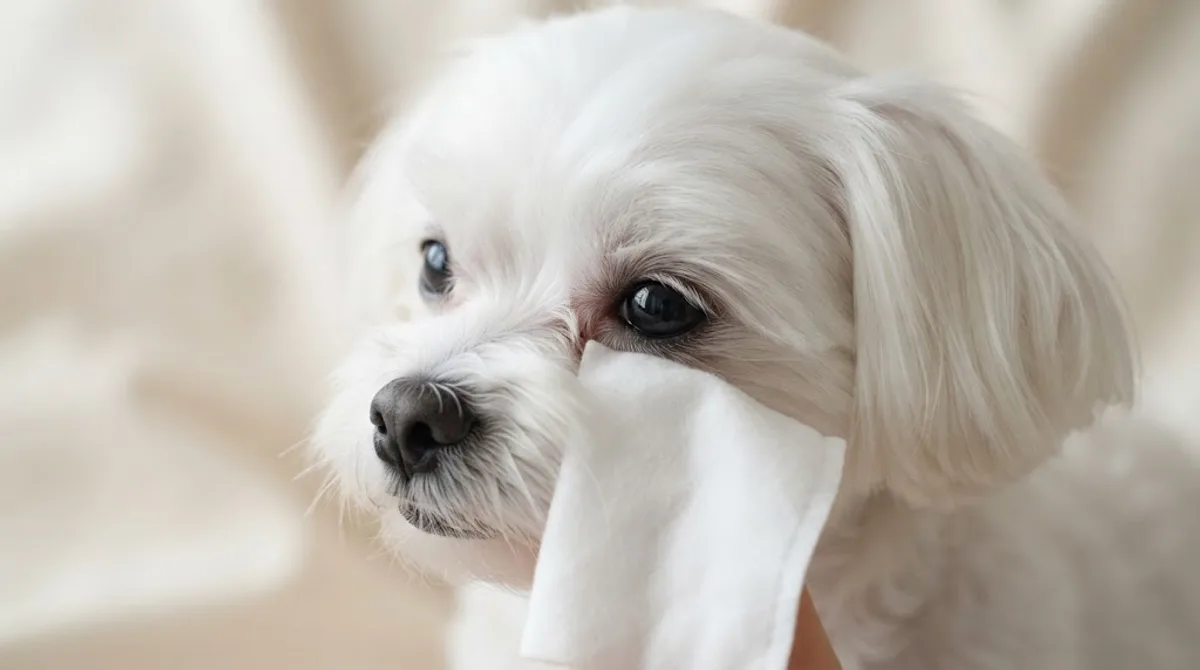
How do you remove tear stains from a Maltese?
Twice a day, soften the area with warm water or saline on a cotton pad, wipe outward from the inner eye corner, comb out crust, then dry the fur completely. Stained hair cannot be bleached white; it grows out clean over one to three months while a groomer trims the worst away. Never use hydrogen peroxide near the eyes, and see a vet for sudden, smelly, or one-sided staining.
The honest starting point: you fade stains, you do not scrub them off
Tear stains are reddish-brown discoloration of the fur under the eyes, left behind when porphyrins, the pigments carried in excess tears (epiphora), soak into a damp face. On a pure white coat the marks are impossible to miss. Here is the truth most product listings skip: hair that is already stained cannot be bleached back to white. No safe whitening product exists for the eye area, and stain removal is really stain management, not a cure.
What a good routine does is stop new pigment setting, so the stained hair slowly grows out or is trimmed away and clean white growth replaces it. That is exactly how the American Maltese Association frames it, and it is the routine this guide walks through step by step. If you want the deeper why, from anatomy to diet, read our full pillar on why Maltese tear-stain in the first place; this post stays on the how.
What removal really means
- Existing stained hair cannot be bleached white
- The routine stops NEW staining within days
- Old colour leaves by grow-out or a trim, over 1 to 3 months
- Consistency, morning and night, beats any single product
Your tear-stain kit: five cheap things
You do not need a shelf of products. The whole kit is: a stack of cotton pads or a lint-free soft cloth; warm water or sterile saline; a fine tooth comb or flea comb for crust; a dry cloth reserved for the face; and unscented dog eye wipes for outings. A groomer or a pair of blunt-tip scissors covers the trimming. That is the entire hygiene setup, and it is the same one we hand new owners at collection.
The daily wipe routine, step by step
This is the core daily cleaning habit, done twice a day, morning and night. Step 1: soak a cotton pad in warm water or saline and hold it gently against the stained area for a few seconds to soften any crust. Step 2: wipe outward from the inner corner of the eye, away from the eyeball, using a fresh pad per eye. Step 3: comb any softened gunk out of the fur with the fine tooth comb. Step 4, the one everyone skips: dab dry with the dry cloth until the fur is properly dry, not just less wet.
Drying is the step that decides everything in Singapore. Our humidity keeps a small face damp for hours, and damp fur is precisely where yeast thrives and pigment sets. So keep dry is not a footnote here, it is the routine. Add a quick blot after walks and after meals, and you have covered the moments the water line under the eyes gets topped up.
Face-washing and drying technique on bath day
On bath day, treat the face as its own job. Use a tearless face wash for dogs only, never body shampoo near the eyes, and work with a damp cloth rather than pouring water over the head. Rinse by wiping, then blot firmly and finish the face with a cool-air dryer pass so nothing stays damp under the eyes. A clean, dry face on a single silky coat is also the foundation of keeping the whole coat white, so the habit pays twice.
Safe products vs never-use
Safe near the eye area: plain warm water, sterile saline, unscented dog eye wipes, and tearless face washes, in line with AKC cleaning guidance. Vet-only: any tear stain remover powder built on tylosin or another antibiotic; these are medications, not cosmetics, and belong under a vet's supervision. And every popular home remedy should clear the same bar: if you would not put it in your own eye, it does not go near your dog's.
Wipes vs powder vs solution: pick one format
The tear stain remover aisle sells three formats that do different jobs. Most owners with a consistent wipe-and-dry grooming routine need nothing beyond daily wipes; the other formats are for heavy tearers, and anything ingestible goes past your vet first.
| Format | Best for | Cadence | Caution |
|---|---|---|---|
| Eye wipes (unscented) | Daily maintenance, travel, after walks | Twice a day | Fragrance-free only; one wipe per eye |
| Grooming powder (e.g. cornstarch-based) | Heavy tearers; keeps the area dry as a moisture barrier | 2 to 3 times a week | Keep powder out of the eye itself; avoid antibiotic powders without a vet |
| Liquid solution or rinse | Softening set stains before combing | A few times a week | Check the label; skip anything with peroxide or bleach |
What a realistic timeline looks like
Set expectations by weeks, not days. Week 1 to 2: less crust, the fur feels cleaner, staining stops spreading. Week 3 to 4: the stain line stops advancing and the fur closest to the skin comes in white; this is the routine working. Month 2 to 3: with the old colour growing out and a face trim or two, the visible staining fades noticeably. If a product promises white fur overnight, it is describing a chemical you should not be using; a gradual fade is what honest prevention looks like.
Quick recap: what triggers the tearing in the first place
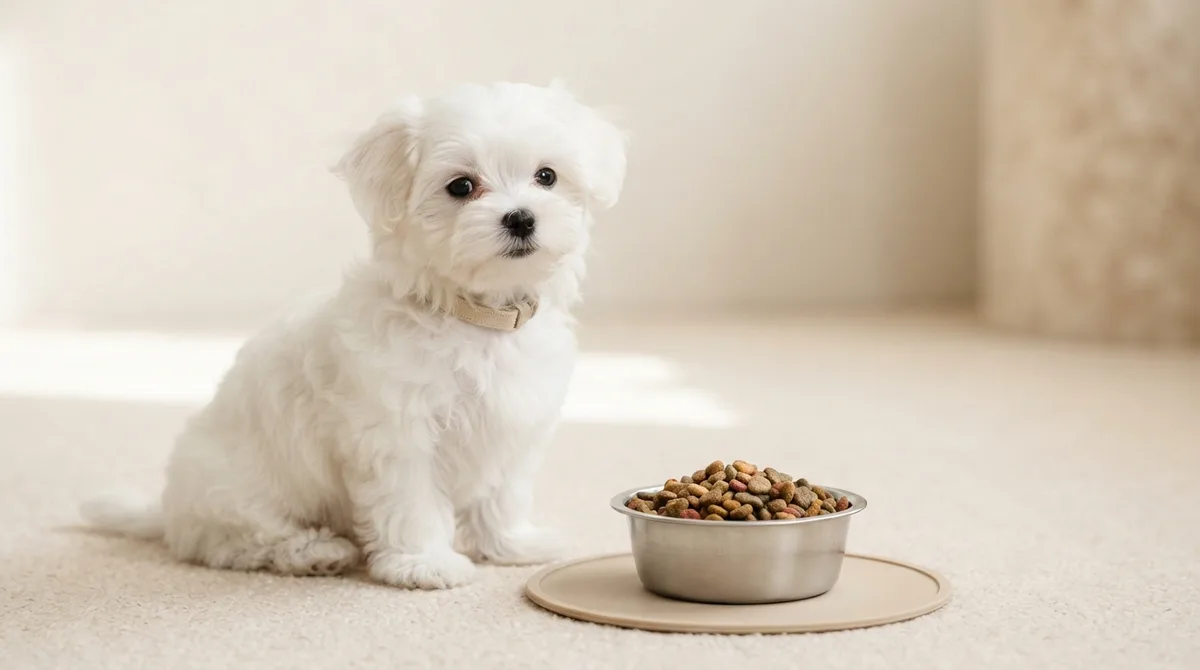
Removal goes faster when you also reduce the tearing. The short list: shallow eye anatomy, teething between roughly four and seven months (see our teething stage guide), mineral-heavy tap water, and for some dogs diet. Easy wins are filtered water, a stainless steel bowl washed daily instead of plastic, and any food change run as a supervised trial. The full breakdown of causes, prevention and the cosmetic-versus-medical call lives on the Maltese tear stains pillar page.
The groomer shortcut: a short face trim every 4 to 6 weeks
The fastest legitimate way to remove stained hair is scissors. A groomer doing a round face trim as part of a puppy cut takes the worst of the old colour off in one salon visit, and short fur around the eyes wicks fewer tears across the face afterwards. In Singapore most Maltese are on a 4 to 6 week salon cadence anyway, so ask for a short, tidy eye area every visit and let a trim do the heavy lifting. It slots neatly into the full white-coat grooming routine.
When removal is the wrong goal: see a vet
Sometimes the staining is a symptom, and no wipe fixes a symptom. Tear-duct and eye health problems need treatment first; the cosmetic side sorts itself out afterwards. It is part of the wider picture of Maltese health: this is a long-lived breed, and eyes that water more than usual are worth taking seriously.
How we set new owners up at handover
Because we place only pure-white Maltese, tear-stain coaching is built into our handover as an AVS licensed shop. We demonstrate the wipe-and-dry sequence on your own puppy before you leave, send the kit list home with you, and stay on WhatsApp for the "is this normal?" photos every new owner sends in week two. Fifty-plus Maltese families later, the pattern is consistent: the owners who do the boring daily cleaning and drying have the whitest faces, whatever products they use.
Frequently asked questions
How long does it take to remove Maltese tear stains?
Expect visible improvement in four to eight weeks, not days. The routine stops new staining within the first week or two, then the stained hair has to grow out or be trimmed away, which takes one to three months.
Can I use hydrogen peroxide on Maltese tear stains?
No. Hydrogen peroxide and any bleaching agent can seriously injure the eye and should never be used on the face. Stick to saline, warm water, or unscented dog eye wipes.
Are Maltese tear stains permanent?
The stained hair keeps its colour until it grows out or is trimmed, but new growth comes in clean once the area is kept dry and wiped daily. The stains are not permanent if the routine is.
Should I use tear stain wipes, powder, or a solution?
Wipes are the easiest daily maintenance, powders build a moisture barrier for heavy tearers, and solutions soften set stains. Most owners only need wipes plus thorough drying.
Are tear stain remover powders with tylosin safe?
Only under a vet’s guidance. Tylosin is a low-dose antibiotic and should not be a daily cosmetic. Ask your vet before using any ingestible tear-stain product.
How often should I wipe my Maltese’s eyes?
Twice a day, morning and night, plus a quick blot after walks and meals in Singapore’s humidity. Drying the fur afterwards matters as much as the wipe itself.
Will my puppy’s tear stains go away after teething?
Often, yes. Teething from about four to seven months raises tearing that usually eases afterwards, but keep the daily routine going so the stains do not set.
When are tear stains a vet problem instead of a grooming one?
If staining is sudden, one-sided, smelly, or comes with squinting, discharge, or a red eye, book a vet. Those signs can mean a blocked tear duct or infection that no wipe will fix.
Related guides
Meet your Maltese
Come say hello at Balestier
2 Balestier Road #01-701, Singapore 320002 · Weekdays 12pm–6pm · Weekends 10am–6pm. Or message us first: tell us about your home and routine, and we'll tell you honestly if a Maltese fits.
Want the why behind the routine?
Causes, prevention, and the cosmetic-versus-medical decision guide live on our full tear-stain pillar. New owners get the routine demonstrated in person at handover.
Read the full tear-stain guide