Maltese care guide
How do I keep my Maltese coat white?
The white coat shows everything, and every stain has a source. Here is the full routine, from whitening shampoo to the blow-dry rule that matters most in Singapore.
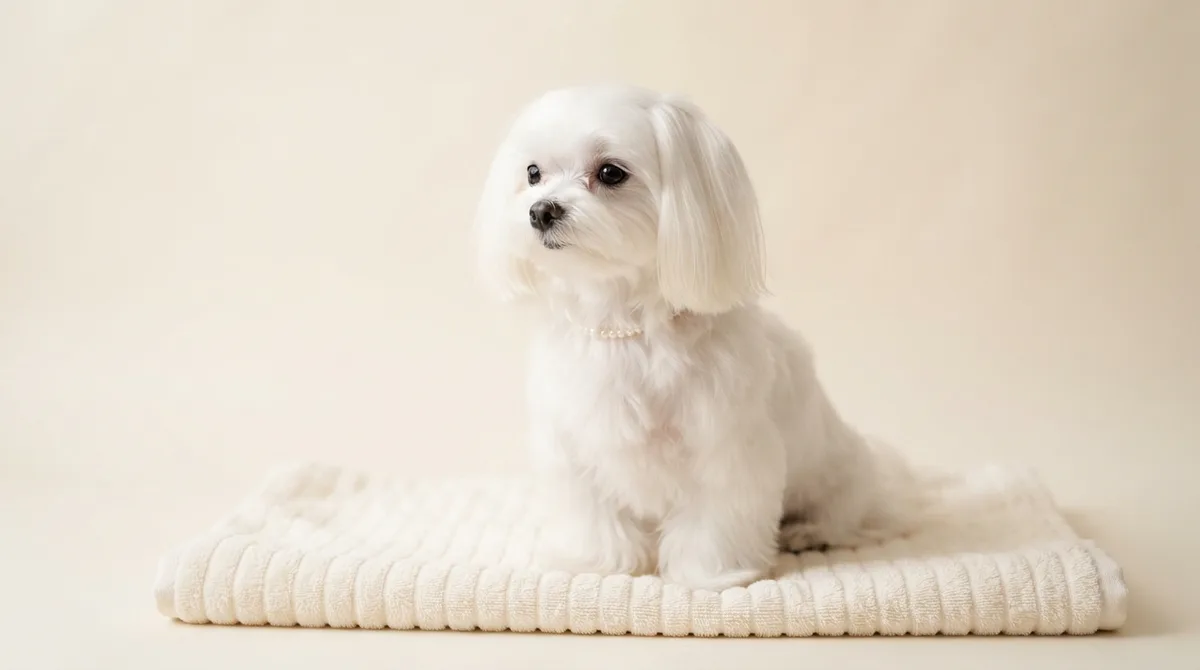
How do I keep my Maltese coat white?
Keep a Maltese white by fixing each stain at its source: daily face, beard and paw cleaning, a bath every one to two weeks with whitening shampoo every second or third wash, conditioner every time, and a full blow-dry, since a damp coat in Singapore's humidity is what yellows, mats and smells. Brush daily with a pin brush and comb, use stainless steel bowls, and let stained hair grow out rather than bleaching it.
Why a white single coat shows everything
A Maltese is pure white with a long, silky single coat and no undercoat, and that combination hides nothing. Tears, saliva, urine splash, bowl grime, grass and city dust all land on white hair and stay visible in a way a coloured coat would quietly absorb. The main culprit behind the classic reddish-brown discolouration is a group of pigments called porphyrins, excreted in every dog's tears and saliva, which oxidise on fur and darken over time. The American Maltese Association covers the science well for tear stains specifically.
The honest framing: keeping a Maltese white is not one product, it is a small system. Find each staining source, fix it at the source, keep the coat clean and, above all in Singapore, keep it dry. Stained hair does not turn white again, but it grows out and gets trimmed away, so a coat on the right routine looks brighter within six to eight weeks.
Whitening shampoo: how it actually works, and how often
A whitening shampoo does not bleach. Most work through bluing agents or optical brighteners, violet-blue pigments that sit on the hair shaft and optically cancel yellow tones, the same trick as purple shampoo for blonde human hair, but formulated for dog skin pH. Used correctly it visibly lifts a dingy coat; used too often it strips the natural oils a silky coat needs and leaves the hair dry, brittle and more prone to matting.
The cadence that works: whitening shampoo every second or third bath only, a gentle everyday dog shampoo the rest of the time, and a conditioner after every single wash without exception. Massage in, leave the lather three to five minutes so the brighteners can deposit, then rinse until the water runs completely clear, because residue itself dulls white hair. Keep it well away from the eyes and follow the AKC guidance around the face.
Bath cadence and the full blow-dry rule
In Singapore most pet Maltese do best when you bathe them every one to two weeks, a little more often than temperate-climate advice suggests, because daily humidity, sweaty void-deck walks and city grime load the coat faster here. Over-bathing dries the skin, so more than weekly needs a genuinely mild shampoo.
The step owners skip is the one that matters most: the full blow-dry. A damp coat in this climate is where every white-coat problem starts, since moisture lets porphyrin stains set, invites yeast and that musty smell, irritates skin and tightens tangles into mats. Towel off, then dry to the skin with a dryer on a cool or low-warm setting, brushing as you go, until the coat is bone dry, roots included. The same rule applies after rain walks. Air-drying a Maltese in Singapore is how a white dog turns cream.
Daily brushing: pin brush first, comb to check
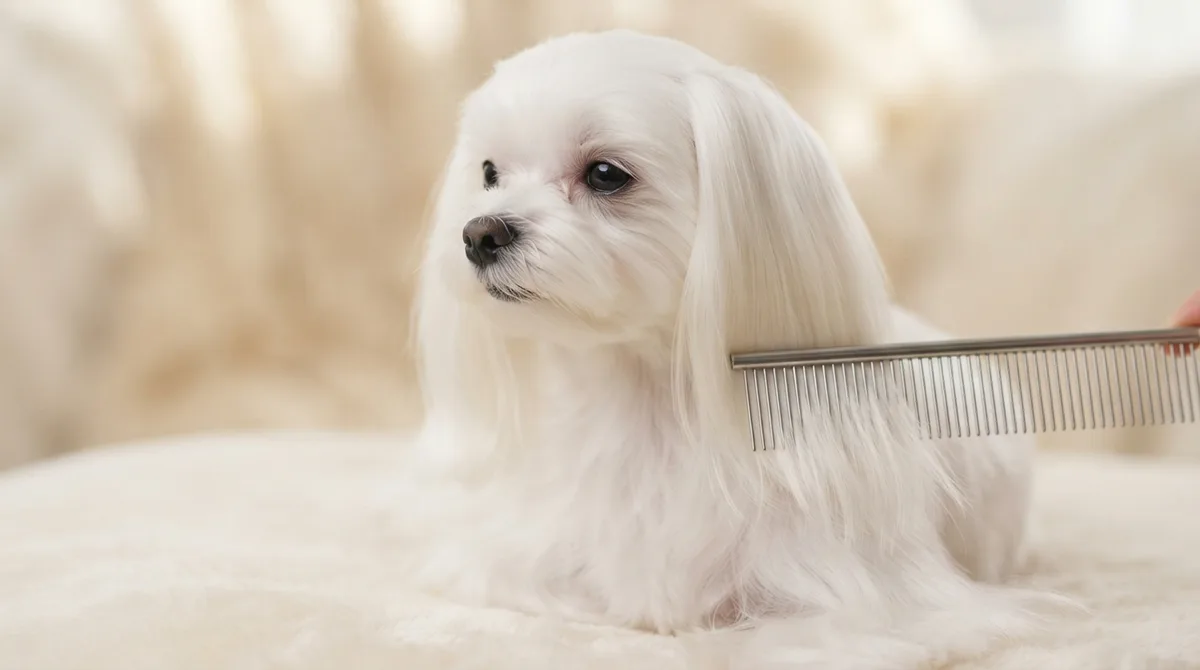
Daily brushing is non-negotiable for a long or mid-length coat and still the habit that keeps a puppy cut bright, because brushing lifts dust and debris before it embeds. Mist lightly with a grooming or detangling spray first, never brush the hair bone dry, then work a pin brush through in layers from the skin outward.
Finish with a metal comb: if it glides from root to tip everywhere, including armpits, ears and behind the legs, you are genuinely mat-free. Five to ten minutes a day beats an hour of dematting on the weekend; our matting guide covers rescue tactics, and the full Maltese grooming guide covers tools and the four-to-six-week salon cadence with a professional groomer.
The white-coat kit
- Pin brush + metal comb, used daily on a misted coat
- Gentle everyday shampoo + whitening shampoo every 2nd or 3rd bath
- Conditioner after every wash, then a full cool-setting blow-dry
- Stainless steel food and water bowls, washed daily
- Unscented wipes or a damp cloth for face, beard and paws
Staining source vs fix: the triage table
Most "my Maltese looks dingy" complaints are really five or six separate stains with separate fixes. Match the location of the yellowing or pink-brown tinge to its source and treat that, rather than reaching for a stronger shampoo.
| Staining source | Where it shows | The fix |
|---|---|---|
| Tears (porphyrins) | Under the eyes | Twice-daily wipe and dry; see the step-by-step removal guide |
| Saliva from licking | Paws, forelegs | Rinse and dry paws daily; vet check if licking is constant |
| Urine splash | Rear feathering, belly, paws | Rinse after toilet trips; keep rear fur trimmed short |
| Food and water bowls | Beard, chin | Swap plastic for stainless steel; wash bowls daily; wipe the beard after meals |
| Grass, mud, sun | Paws, belly, back | Wipe down after walks; avoid long midday sun exposure |
| Damp coat | Anywhere, plus musty smell | Full blow-dry after every bath and rain walk |
Saliva and urine: why the paws and beard go pink first
Saliva staining carries the same porphyrins as tears, so persistent paw licking turns white paws rusty-pink even when the rest of the dog is gleaming. Occasional grooming licks are normal; constant licking is a symptom, most often allergies, itchy skin or boredom, so ask your vet before treating it as a purely cosmetic problem. Meanwhile a quick paw rinse and thorough dry each evening stops the pigment accumulating.
Urine is the other quiet offender for a low-slung, long-coated breed. Splash catches the rear feathering, belly and feet, and it stains fast and smells faster. Keep the sanitary areas and feet trimmed short, rinse after toilet trips where practical, and tighten toilet habits with our potty training guide. The beard collects food and water at every meal, so a wipe and dry after eating is a ten-second habit with an outsized payoff.
Bowls and water: the staining nobody suspects
A scratched plastic bowl is a bacteria hotel, and those bacteria are a classic cause of chin and beard staining on white dogs. A stainless steel bowl resists scratching, cleans properly and is the cheap upgrade we recommend to every owner; wide and shallow is best, so less of the face dunks at each drink. Wash food and water bowls daily, not weekly.
Some owners also report cleaner faces after switching to filtered water. Evidence is anecdotal, but it is a harmless, low-cost trial worth running for a month if beard staining persists after the bowl swap.
Sun and grass: outdoor discolouration, Singapore edition
Long, repeated exposure to strong sun gradually dulls and yellows white fur, and the thinly coated pink skin underneath a Maltese parting can burn. This is Singapore, so the fix is timing rather than avoidance: walk before 9am or after 5pm, keep midday outings short and shaded, and your dog's coat and heat tolerance both benefit.
Wet grass, mud and park dust after our afternoon downpours cling to a white coat within one enthusiastic zoomies session. A thirty-second wipe-down of paws, legs and belly at the door, with a proper dry, keeps outdoor routine from becoming indoor staining. Many owners keep a microfibre towel and wipes at the entrance for exactly this.
The coat change: puppy fluff to adult silk
Between roughly four and twelve months a Maltese swaps its soft, cottony puppy coat for the flatter, silkier adult coat described in the AKC breed standard. The colour stays white, occasionally with faint lemon or cream tinges on the ears that usually fade, but the texture shifts noticeably, and during this coat change the mixed old-and-new hair mats faster than at any other life stage. Daily brushing matters double here, and many owners schedule a shorter clip to sail through it.
Good news on staining: teething over the same window temporarily increases tearing, so a stained-faced adolescent is normal and usually brightens once adult teeth are in and the adult coat settles. Keep the routine steady and let the stained hair grow out.
How we set owners up at handover
Every Maltese we place is pure white, and after 50+ Maltese placed with Singapore families we have coached this exact routine dozens of times. At handover from our AVS licensed shop we walk you through it on your own puppy: the face wipe, the pin brush and comb in the right order, the blow-dry technique, and the whitening-shampoo cadence, so day one at home starts with the habit already demonstrated rather than a page of instructions.
We are upfront that a white coat is the highest-maintenance thing about this breed. Owners who accept the ten minutes a day get a dog that genuinely gleams; there is no shortcut product that replaces it, and anyone selling one is selling the myth.
Frequently asked questions
What shampoo keeps a Maltese white?
A dog-specific whitening shampoo that uses bluing or optical brighteners, used every second or third bath and always followed by conditioner. It brightens optically rather than bleaching, and over-use dries the silky single coat.
How often should I bathe my Maltese in Singapore?
Every one to two weeks suits most pet Maltese here, given daily humidity and city grime. Always finish with a full blow-dry on a cool setting; a damp coat is what actually yellows, mats and smells.
Why is my white Maltese turning yellow?
Usually surface staining, not the hair changing colour: tears, saliva, urine splash, bowl contact, grass and a coat left damp after baths or rain. Fix the source and the stained hair grows out white.
Why are my Maltese's paws pink or rusty?
Paw licking deposits saliva porphyrins that oxidise reddish-brown, and urine splash adds to it. Rinse and dry the paws after toilet trips and walks, and ask your vet to rule out allergies if licking is constant.
Do stainless steel bowls really help keep the coat white?
Yes. Scratched plastic bowls harbour bacteria that can stain the beard and chin, while stainless steel stays cleaner. A wide, shallow bowl also keeps less of the face wet at each drink.
Does the sun discolour a white Maltese coat?
Repeated strong midday sun can dull and yellow white fur and risks burning the pink skin under a thin parting. In Singapore, walk early or late and keep midday outings short and shaded.
Will my puppy's coat change colour as it grows?
Texture changes more than colour: soft puppy fluff becomes the silkier adult single coat between roughly four and twelve months. Mats spike during the change, and teething-related staining usually eases once adult teeth are in.
Can I bleach or use human whitening products on my dog?
No. Bleach, peroxide and human purple shampoos are not pH-suited to dog skin and are dangerous near the eyes. Use dog-specific whitening shampoo and let stained hair grow out or be trimmed.
Related guides

Meet your Maltese
Come say hello at Balestier
2 Balestier Road #01-701, Singapore 320002 · Weekdays 12pm–6pm · Weekends 10am–6pm. Or message us first: tell us about your home and routine, and we'll tell you honestly if a Maltese fits.