Maltese care guide
Are Maltese hypoallergenic, and do they shed?
The Maltese is one of the breeds allergy-sensitive owners ask about most. Here is the honest answer on shedding, dander, how allergies really work, and what actually helps at home.
Are Maltese hypoallergenic?
No dog is truly hypoallergenic, but the Maltese is one of the better choices for sensitive owners. Its single silky low-shedding coat traps loose hair and dander instead of dropping it around the home, so fewer allergens go airborne. Allergens are proteins in dander and saliva, not the hair itself, so regular grooming, and meeting a dog before you commit, matter more than the label.
Are Maltese hypoallergenic? The honest answer
Here is the short, honest version: no dog is 100% hypoallergenic, and the Maltese is no exception. What the breed offers is a genuinely low-shedding single coat that keeps far fewer allergens circulating around your home, which is why the Maltese is one of the better choices for an allergy-sensitive household. That is a real advantage, but it is not the same as allergen-free.
The confusion comes from a common myth: people assume the trigger is dog hair. It is not. Allergies are a reaction to proteins in a dog's dander, saliva and urine. A low-shed breed like the Maltese simply spreads fewer of those proteins around, because less loose hair and dead skin ends up airborne on your sofa and bedding. If you understand that distinction, you can judge the Maltese fairly instead of expecting a miracle.
The honest short version
- No dog is fully hypoallergenic, Maltese included
- Allergens are proteins in dander and saliva, not the hair itself
- The single silky coat is genuinely low-shedding
- Fewer airborne allergens, but a real routine is still needed
- Always test your own reaction before you commit
How dog allergies actually work
Understanding the mechanism helps you set expectations. The main dog allergen has a name: Can f 1, a protein produced in a dog's skin (dander), saliva and skin glands. When a dog licks itself, that protein dries on the coat; when dead skin flakes off, it rides on tiny particles that float and settle everywhere. Breathe or touch enough of it, and a sensitised immune system reacts with sneezing, itching or worse.
Two things follow from this. First, because every dog makes Can f 1, "hypoallergenic" only ever means "lower allergen load", never "none". Second, the amount an individual person reacts to varies enormously, which is why one allergy sufferer lives happily with a Maltese while another still reacts. The proteins are the same; the exposure and your own sensitivity are what differ. That is also why regular grooming, which physically removes dander and saliva-coated hair, does more for your symptoms than the breed label ever will.
The single silky coat and the hair-not-fur cycle
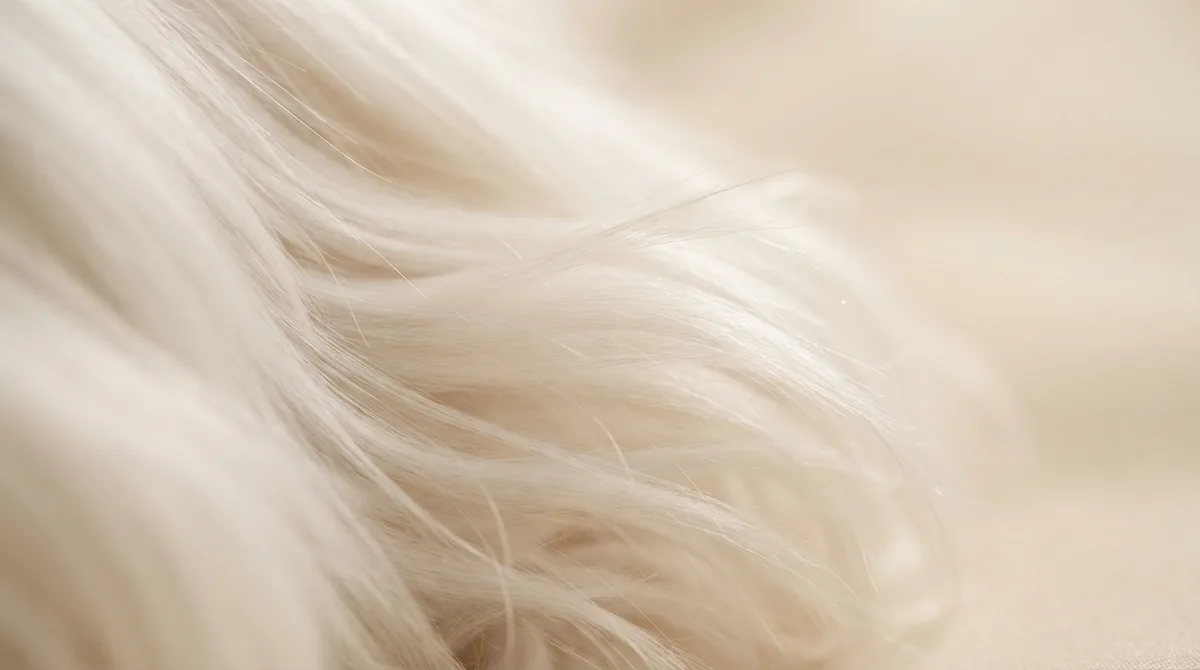
The Maltese owes its low-shedding reputation to coat structure. It carries a single, silky layer of hair with no woolly undercoat. Double-coated breeds grow, then "blow", a dense undercoat on a seasonal cycle, releasing clouds of dander-laden fur. The Maltese does not have that layer to shed, so it never has a heavy moult.
People often say the Maltese has hair, not fur. What that really describes is the growth cycle: each strand sits in a long growing phase and keeps lengthening, much like human hair, rather than reaching a short length and dropping out. So instead of falling onto the floor, a loose Maltese hair tends to stay tangled in the surrounding coat until you brush it out. Fewer hairs in the air means fewer saliva and dander carriers in the air, which is the whole basis of the low-allergen claim.
The shedding reality: hair in the brush, not on the sofa
In day-to-day life, Maltese owners see very little loose hair around the home. You will not find drifts of white fur on dark clothes or the couch the way you would with a heavy shedding breed. Instead, the shed hair collects in your brush. That is the honest trade-off of a low-shed coat: you swap vacuuming for grooming.
That swap is not optional. Because the coat holds onto loose hair, skipping the daily brush lets it mat, and matted, unwashed fur traps more dander against the skin, which is the opposite of what an allergy household wants. So the Maltese is low-maintenance for your floors but high-maintenance for your hands. Owners who keep the routine get a clean home with minimal airborne allergens; owners who skip it get mats and, ironically, more trapped dander.
The allergy-sufferer household playbook
If someone at home is sensitive, the breed choice is only step one. What you do around the dog matters far more for day-to-day symptoms. This is the routine most allergy-aware Maltese households in Singapore settle into, and it is worth reading before you decide.
| Habit | Why it helps | How often |
|---|---|---|
| Bedroom off-limits to the dog | Keeps the sleeping area a low-allergen zone | Always |
| HEPA air purifier in main rooms | Captures airborne dander particles | Runs daily |
| Bathe and brush the Maltese | Washes dander and saliva off the coat | Bath weekly to fortnightly, brush daily |
| Hard floors over carpet | Dander cannot embed the way it does in pile | Permanent setup |
| Wipe the coat down after outings | Removes fresh dander and outdoor allergens | After each walk |
| Wash dog bedding hot | Strips accumulated dander and saliva | Weekly |
| Wash hands after cuddles | Stops transfer to your own eyes and face | Every time |
Meet the dog first: the one step nobody should skip
This is the single most important piece of advice on this page, and it is the one most buying guides gloss over. Because individual allergy responses vary so much, the only reliable test is real-world exposure. Spend proper time in the same room as a Maltese, ideally more than once, before you commit to bringing one home. A short cuddle is not enough; you want an hour or two so a slow-building reaction has time to show.
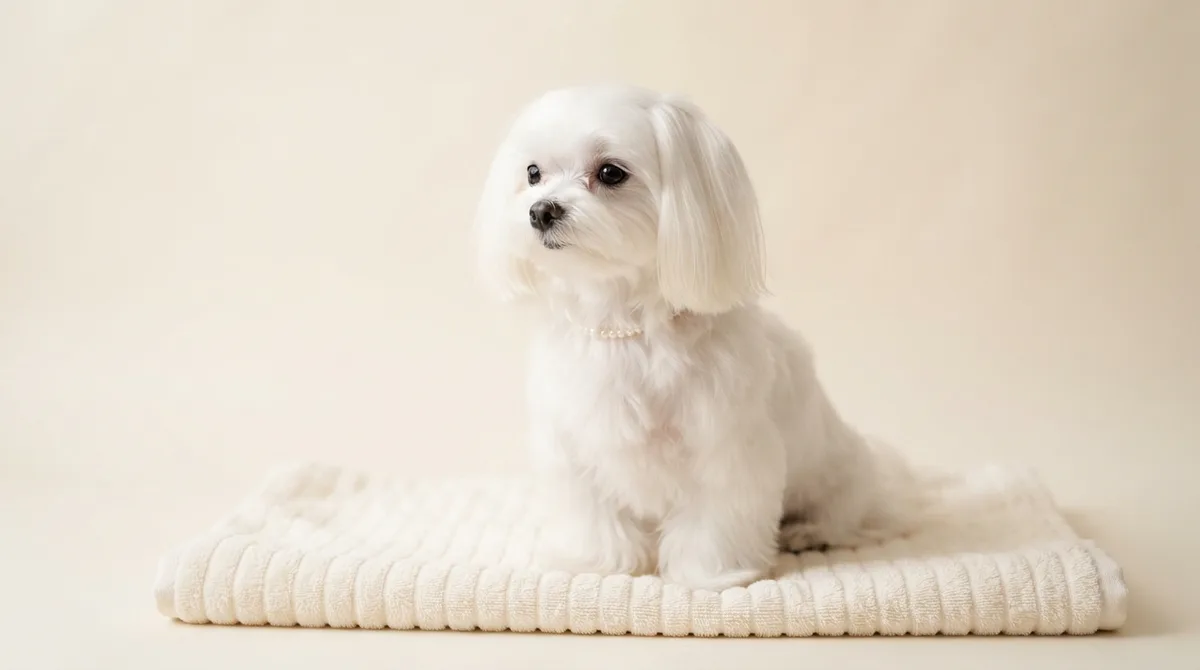
This is where a licensed shop helps. You are welcome to visit our Balestier shop and spend unhurried time with our Maltese before any decision, exactly so an allergy-sensitive family member can gauge their own reaction in person. We would far rather you found out at the shop than after a puppy is already home. It is the same honest approach we take to keeping the coat white and to grooming: test reality, do not trust the label.
Grooming is the real allergen control
If you take one action away from this guide, make it grooming. Regular bathing physically rinses dander and saliva proteins off the coat before they can dry and go airborne, and daily brushing lifts out the loose hair that would otherwise trap allergens against the skin. For an allergy household, a well-groomed Maltese is meaningfully less reactive than a neglected one of the same breed.
In humid Singapore, most owners bathe every one to two weeks and keep a practical puppy cut, which dries fast and is easy to wipe down. Our full Maltese grooming guide sets out the cadence, and because a clean white coat and low allergens go hand in hand, the tear-stain and coat routines all pull in the same direction.
Maltese versus other "hypoallergenic" breeds
It is worth being honest about the competition, because "hypoallergenic" gets stamped on a lot of breeds. The Maltese, the Bichon Frise, the Poodle and the Poodle crosses all earn the label for the same reason: low shedding and less loose dander in the air. None of them is allergen-free, and no reputable source ranks one as reliably "safer" than another for allergies, because the deciding factor is your own reaction to that specific dog.
Where they differ is coat handling. The Maltese's single silky coat mats readily and needs daily brushing; a Bichon's curlier coat and a Poodle cross's fleece each behave differently. If you are weighing options, our honest Maltese vs Bichon Frise and Maltese vs Maltipoo comparisons walk through the real trade-offs. The takeaway holds across all of them: pick on temperament and grooming fit, then confirm with a real meeting, not on the hypoallergenic label alone.
Frequently asked questions
Are Maltese hypoallergenic?
Not fully. No dog is 100% hypoallergenic, but the Maltese single silky coat sheds very little and keeps fewer dander and saliva allergens airborne, which makes it one of the better breeds for sensitive owners.
Do Maltese shed?
Very little. They have a single coat with no undercoat, so loose hair stays in the coat until you brush it out rather than dropping around the home.
Why are dog allergies about saliva and dander, not hair?
The allergen is a protein called Can f 1 that comes from a dog’s skin and saliva. It coats the hair and floats on dead-skin particles, so the hair is only the carrier, not the trigger.
Will a Maltese trigger my allergies?
It might still, since every dog produces some allergens, but many sensitive owners react less to a Maltese. Individual responses vary, so spend real time with one before deciding.
Does grooming reduce allergens?
Yes, significantly. Regular bathing rinses dander and saliva off the coat and daily brushing removes loose hair, so a well-groomed Maltese is less reactive than a neglected one.
How do I keep allergens down with a Maltese at home?
Keep the dog out of bedrooms, run a HEPA purifier, bathe weekly to fortnightly and brush daily, favour hard floors, wipe the coat after walks, and wash dog bedding hot.
Are Maltese good for asthma sufferers?
Some manage well because of the low shedding, but responses vary and asthma is serious. Speak to an allergist and arrange trial exposure before committing.
Is a Maltese more hypoallergenic than a Poodle or Bichon?
No breed is reliably safer than the others. They all shed little and release less dander, so the deciding factor is your own reaction to the specific dog, not the label.
Related guides


Meet your Maltese
Come say hello at Balestier
2 Balestier Road #01-701, Singapore 320002 · Weekdays 12pm–6pm · Weekends 10am–6pm. Or message us first: tell us about your home and routine, and we'll tell you honestly if a Maltese fits.