Maltese care guide
How do I settle a Maltese puppy in its first week home?
The first week sets the tone. Here is the calm, ordered way to bring a Maltese puppy home: what to buy, how to keep a fragile toy body safe, the food and sleep rules that prevent trouble, and when to call the vet.
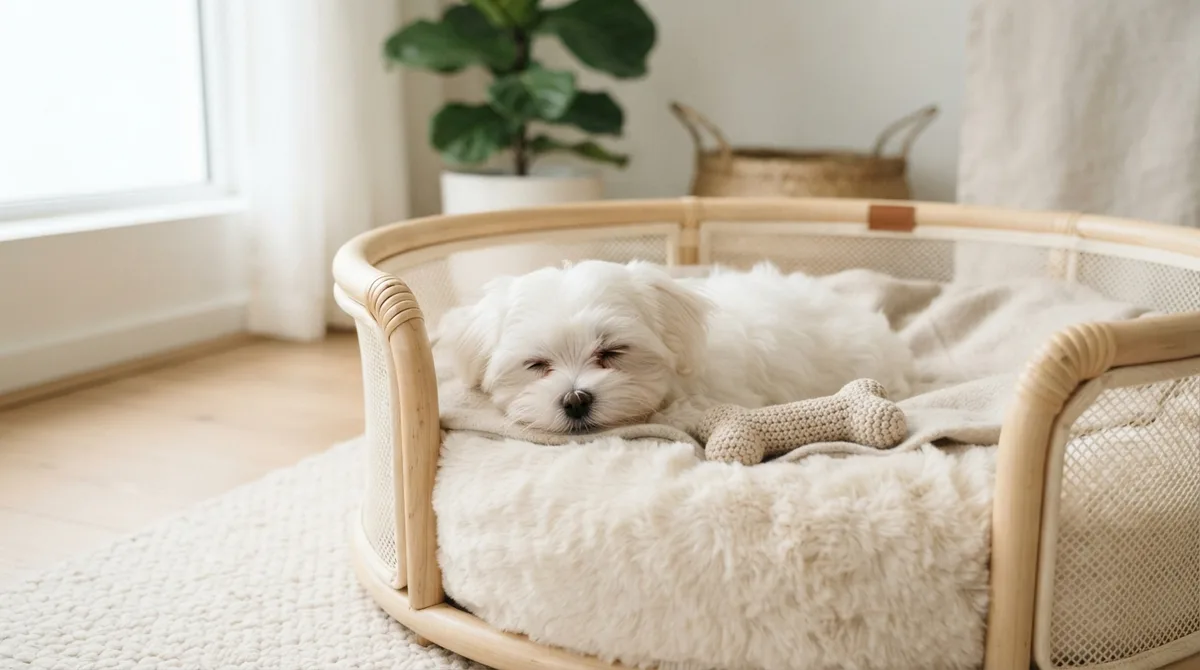
How do I settle a Maltese puppy in its first week home?
Set up a playpen with a crate or den before pickup and puppy-proof the flat. Keep the ride and the first days calm, feed the exact same food in small frequent meals to avoid an upset stomach and hypoglycaemia, sleep the den near you the first nights, and start the toilet and face-clean routines from day one. Book a first vet check within a few days and keep the puppy away from public dog areas until its vaccinations are complete.
What to buy and how to puppy-proof an HDB flat before pickup
The calmest first week starts before your puppy is even in the car. A Maltese comes home a tiny 2 to 4kg toy dog, most of them barely a kilogram at week 9, so set the home up around a small, fragile body. In one quiet corner of the flat, away from the front door and the busiest room, build a playpen with a cosy crate or den, a shallow water bowl, a pee tray or pads at the far end, and a couple of safe chew toys. Our starter kit covers most of this, so you are ready on day one rather than shopping with a nervous puppy in your arms.
Then puppy-proof the space. In an HDB flat the real hazards are low down: exposed electrical cords, gaps behind furniture a curious puppy can wedge into, dropped medication or chocolate, and any unscreened balcony or window, which is a genuine danger for a dog this small. Remember Singapore rules too: HDB allows one dog per flat from the approved small-breed list, and the Maltese is named on it, so licence your puppy with NParks once it is home. A little puppy-proofing now saves a frantic week later.
The pre-arrival shopping list
- Playpen plus a crate or covered den for a safe space
- Small stainless bowls and a supply of the same food it eats now
- Pee tray or training pads, plus enzyme cleaner for accidents
- A soft blanket that can carry a familiar scent from the litter
- Gentle puppy shampoo, a soft brush and face-wipe cloths
- A lightweight collar or harness, ID tag and lead for later
The ride home and the first hour
The journey is your puppy's first experience of the wider world, so keep it low-drama. Have someone hold the puppy securely, or use a lined carrier, and bring that familiar-smelling blanket so the car already smells a little like safety. Skip the errands: this is a straight, quiet ride home, ideally with the aircon gentle rather than blasting cold air onto a 1kg body. If the drive is long, a brief stop is fine, but do not put an unvaccinated puppy on the ground in public areas.
When you arrive, resist the urge to tour the whole house. Carry your puppy straight to its toilet spot first, wait, and quietly reward if it goes. Then show it the playpen and let it explore that small zone under supervision. Everything else, the other rooms, the excited relatives, the new toys all at once, can wait. A new puppy takes in a home best one calm corner at a time.
Day one: let your puppy decompress
The single most useful thing you can do on day one is less. A Maltese has just left its littermates, and it needs a decompression window: quiet, predictable, low stimulation. Keep visitors to almost none, keep voices soft, and let the puppy come to you rather than being passed around. Sit on the floor near the pen and let curiosity do the work; a puppy that chooses to approach is building trust, while one that is grabbed and cuddled on demand is just enduring it.
Expect an emotional day, for both of you. The first week is widely, and honestly, described as the hardest, and a flat, sleepy or slightly off-food puppy on the first evening is usually just overwhelmed, not ill. Keep the routine gentle, watch quietly, and take the wins small. The UK's RSPCA puppy care advice makes the same point: a consistent, unhurried start prevents most early problems.
Keep the same food, at least for the first week
Moving home is stressful, and a stressed toy gut is easily upset, so change as little as possible about the food. Feed the exact same food, in the same amounts, that your puppy has been eating, for at least the whole first week. Stacking a diet change on top of a house move is the classic cause of an upset stomach, loose stool or a suddenly picky eater in the first few days. Continuity first; preference later.
This is exactly how we hand over at Curious Tails, our AVS licensed shop. Every Maltese goes home with a supply of its current food, a written feeding plan, its vaccination record and our aftercare line, so the handover changes as little as possible for the puppy. If you do want to switch brands eventually, wait until your puppy has settled, then run a slow 7-day transition. The how-and-why of that is in our full guide to feeding a Maltese.
Small frequent meals and the hypoglycaemia watch
Frequency matters as much as the food itself in these first days. A young Maltese needs small frequent meals, three to four meals a day, spaced through the day, because a tiny puppy carries almost no energy reserve. In a stressful settling-in week, when a puppy may be too unsettled to eat well, a skipped meal can tip it into hypoglycaemia: a sudden drop into low blood sugar territory that is a real emergency in a body this small.
Keep the schedule boring and predictable, and never fast a toy puppy for convenience. Watch the appetite: a puppy that refuses food and goes quiet and flat is not sulking, it may be at risk. Offer the meal again within the hour, and if it stays uneaten and the puppy seems weak, treat it as urgent.
Crate, den and the first-night crying
Set the crate or den up as a safe space, never a punishment: soft bedding, that familiar-smelling blanket, and a spot where the puppy can see you. For the first nights, put the den in your bedroom. A Maltese is a classic velcro breed that thrives on company, so waking alone in a strange dark room is exactly what sets off distress. You can slowly move the den to its permanent place once your puppy is confident.
Some first night crying and whining is normal; it has just left its family. Comfort gently, a calm word or a hand near the crate, without switching on the lights and turning it into a party, which teaches the puppy that crying summons fun. Offer a quiet night-time toilet break if needed. Most puppies settle within a few nights. Because this breed is separation-prone, also seed short, boring spells alone from day one so being by itself feels normal; our separation anxiety guide shows how, and the AKC first-night guidance covers the sleep side.
Toilet routine from day one
Start the toilet routine the moment you arrive, because the groundwork of potty training laid now saves months later. A Maltese has a tiny bladder, so offer the toilet spot after every single sleep, meal and play session, plus first thing in the morning and last thing at night. Go with your puppy, wait, and quietly reward the instant it finishes in the right place. Success that is noticed gets repeated.
Accidents will happen in week one; they are a training gap, not defiance, so never punish them. Clean up calmly with an enzyme cleaner so no scent-marker is left to invite a repeat, and simply increase your supervision. For the full method, from pad to tray to outdoors, follow our potty-training guide. In the first week, frequency and praise do most of the work.
Your first week, day by day
No two puppies read a calendar the same way, so treat the plan below as a gentle map, not a schedule to enforce. The shape is the same for almost every Maltese: settle and decompress first, layer in the routine, then slowly widen the world once your puppy is eating, toileting and sleeping with some confidence.
| Day | Focus | What to do |
|---|---|---|
| Day 1 | Arrive and decompress | Quiet ride home, toilet spot first, show the pen only, minimal handling |
| Days 2 to 3 | Routine takes shape | Fixed meal and toilet times, den in your room at night, gentle bonding |
| Days 3 to 4 | First vet health check | Book the vet visit, confirm remaining vaccination dates, weigh the puppy |
| Days 4 to 5 | Gentle handling | Short supervised holds on the floor, introduce resident pets slowly |
| Days 5 to 6 | Habits begin | Start the daily face-clean, brief calm alone-time spells, first tiny grooming |
| Day 7 | Settling in | Most puppies now eat, toilet and sleep more predictably; keep it steady |
Handling a 1kg body gently: children and other pets
A newborn-light Maltese is genuinely fragile, and the most common first-week injuries come from love, not neglect: a puppy dropped from a standing cuddle, stepped on underfoot, or squeezed by an excited child. The rule that prevents nearly all of it is simple: anyone who wants to hold the puppy sits on the floor first, so there is nowhere to fall. Keep gentle handling the only kind of handling in these early days.
With children, supervise every interaction and coach calm: no chasing, no picking the puppy up and carrying it around, no disturbing it while it sleeps in the den. Introduce any resident dog or cat slowly and on neutral, supervised terms rather than nose-to-nose on arrival. Handled this way, a Maltese bonds into the affectionate, people-loving companion the breed is famous for.
Gentle-handling ground rules
- Hold the puppy only while sitting on the floor
- Watch your feet: a 1kg puppy is easy to step on
- Supervise all child contact; no chasing or carrying around
- Let a sleeping puppy sleep, den time is off-limits
- Introduce other pets slowly, supervised, never forced
Start the tear-stain and face-cleaning habit early
The Maltese signature, a pure-white coat around the eyes, means tear stains are a lifelong upkeep job, and the easiest time to make it painless is right now. From week one, add a gentle daily face cleaning to the routine: wipe the eye area and muzzle with a soft, damp cloth so moisture and food never sit against the white coat. Do it calmly, with a treat after, so your puppy learns that having its face touched is normal and even pleasant.
Starting young pays off twice: it keeps the coat cleaner from the outset, and it makes every future grooming session, brushing, bathing, eye care, far less of a battle. You do not need product yet, just the habit. When you want the full picture of causes and the routine that works long-term, see our complete tear-stain guide.
The first vet check and remaining vaccinations
Book a first vet check within the first few days home. It confirms your puppy is healthy, gives the vet a baseline weight, and lets you hand over the vaccination record so the remaining course is planned. A Maltese comes home part-way through that course: the schedule runs at weeks 6, 8 and 12, with an optional 16-week shot, and your puppy is usually home around week 9, so at least one vaccination is still due after arrival.
Until the course is complete, your puppy is not fully protected, so keep it away from public dog areas, parks and unvaccinated dogs, and stick to your own clean home. Confirm your puppy is microchipped and the chip is registered to you. For the whole health arc, from these first shots through to the senior years and a typical 12 to 15 year lifespan, read our lifespan and health guide.
| Age | Milestone | Note |
|---|---|---|
| Week 6 | First core vaccination | Given before your puppy comes home |
| Week 8 | Second core vaccination | Usually done before handover |
| ~Week 9 | Puppy comes home | Settle and book the first vet check |
| Week 12 | Third core vaccination | Often falls after arrival; confirm the date |
| ~Week 16 | Optional final shot | Vet-guided; completes early protection |
| Year 1 onward | Annual booster | Yearly check keeps weight and coat under review |
Settling in, and when to call us
By the end of the first week, most puppies are eating on a schedule, learning the toilet routine, sleeping through more of the night and choosing to be near you. That is the goal: not a perfectly trained dog, but a calm, settling one that trusts its new home. Keep the routine steady into weeks two and three, keep bonding gentle, and let confidence build at the puppy's pace.
Some things, though, earn a call rather than a wait. If your puppy shows the hypoglycaemia signs above, refuses food for more than a meal or two, has ongoing vomiting or diarrhoea, or simply seems very flat and unresponsive, contact a vet promptly, small bodies change fast. And whatever the question, our aftercare line is here; that is exactly what it is for. If you are still choosing your Maltese, meet our available puppies or message us on WhatsApp and we will talk you through the whole first week before you commit.
Frequently asked questions
How do I settle a Maltese puppy in its first week?
Keep everything calm and predictable. Set up a playpen with a crate or den in a quiet corner, keep the same food it came home on, start a gentle toilet and sleep routine, let the puppy come to you, and keep visitors to a minimum while it decompresses.
Where should my Maltese puppy sleep the first night?
In a cosy crate or den, ideally in your bedroom for the first few nights so it does not feel alone. A familiar-smelling blanket helps, and you can slowly move the den to its permanent spot once the puppy has settled.
Is it normal for a Maltese puppy to cry the first night?
Yes. It has just left its littermates, so some crying and whining is normal. Comfort gently without making a big fuss, keep the den close, and offer a calm night-time toilet break. Most puppies settle into a night routine within a few days.
Should I change my puppy’s food when it comes home?
No. Keep the exact food it came home on for at least the first week to avoid an upset stomach on top of the stress of moving. If you want to switch later, do it gradually over about seven days.
Why does my toy puppy need small frequent meals?
A young Maltese carries almost no energy reserve, so a skipped meal in a stressful first week can trigger hypoglycaemia, a dangerous drop in blood sugar. Feed three to four small meals a day and never fast a toy puppy.
When should my new Maltese puppy see a vet?
Book a first health check within the first few days. Your puppy comes home part-way through its vaccination course, weeks 6, 8 and 12 with an optional 16-week shot, so confirm the remaining dates and avoid public dog areas until it is fully covered.
How do I introduce a fragile Maltese puppy to children?
Supervise every interaction and have children sit on the floor to hold the puppy, never carry it around. A Maltese can weigh around a kilogram and is easy to drop or step on, so keep handling gentle, calm and brief.
When can I take my Maltese puppy outside?
Wait until its vaccination course is complete before visiting public dog areas or parks. Until then, keep to your own clean, safe home and let the first week be about settling rather than outings.
Related guides

Meet your Maltese
Come say hello at Balestier
2 Balestier Road #01-701, Singapore 320002 · Weekdays 12pm–6pm · Weekends 10am–6pm. Or message us first: tell us about your home and routine, and we'll tell you honestly if a Maltese fits.